
Choosing sustainable materials for your custom apparel and promotional products goes beyond following a trend. It’s about making informed decisions that align with your values and meet growing consumer expectations for environmental responsibility. With terms like "organic," "recycled," "biodegradable," and "eco-friendly" appearing across product descriptions, understanding what these labels actually mean helps you select materials that deliver genuine environmental benefits while maintaining the quality and printability your projects demand.
This guide breaks down the essential sustainable materials available today, explains the terminology clearly, and shows you which options work best for different types of custom printing, so you can confidently create merchandise that reflects both your environmental commitment and professional standards.

Why Sustainable Materials Matter
- Growing Consumer Demand for Environmental Responsibility - Buyers increasingly research companies' environmental practices and expect brands to take genuine action on sustainability issues, making eco-conscious material choices essential for building customer trust.
- Competitive Advantage in Crowded Markets - Authentic sustainability messaging sets your brand apart from competitors using generic "green" language, creating meaningful differentiation that resonates with environmentally conscious consumers.
- Enhanced Brand Credibility and Trust Building - Choosing certified sustainable materials like GOTS organic cotton or recycled content provides verifiable proof of environmental commitment, avoiding greenwashing accusations while building stronger customer relationships.
- Corporate Compliance and Policy Requirements - Many companies now require suppliers and promotional products to meet sustainability standards for CSR initiatives, green campaigns, and environmental compliance programs.
- Premium Pricing Opportunities - Brands with credible environmental commitments often command higher prices as customers willingly pay more for values alignment, improving profit margins on sustainable product lines.
- Employee and Talent Attraction - Clear environmental messaging through sustainable materials attracts team members and partners who want to work with companies that match their personal values, supporting recruitment and retention goals.
- Reduced Environmental Impact Throughout Lifecycle - Sustainable materials like organic cotton, recycled polyester, and bamboo significantly lower resource consumption, chemical usage, and waste generation compared to conventional alternatives.
- Future-Proofing Business Operations - As environmental regulations tighten and sustainability becomes standard practice, adopting sustainable materials now positions your business ahead of coming requirements and market shifts.
Sustainability Terms Explained
Green: This is basically the catch-all term that companies slap on anything that's supposed to be environmentally conscious, however it's not regulated at all. You'll see "green" on everything from cleaning supplies to custom t-shirts, but it doesn't tell you much about what actually makes the product better for the planet. Think of it as environmental marketing speak that sounds nice but requires you to dig deeper for the real details.
Eco-friendly: Similar to "green," eco-friendly suggests a product has reduced environmental impact, usually through things like minimal resource use or less pollution during production. The catch is that there's no official standard for what qualifies as eco-friendly, so companies can interpret this pretty loosely. When you see this term, look for specific details about what makes the product better for the environment.
Sustainable: The product is produced in a way that doesn't deplete natural resources or cause lasting environmental damage. True sustainability looks at the entire lifecycle of a product, from raw materials to disposal. It's about creating a system that can keep going indefinitely without screwing up the planet for future generations.
Recycled: The material is made from existing waste instead of virgin resources. In custom apparel, you'll often see recycled polyester made from plastic bottles or fabric scraps. The beauty of recycled materials is that they give new life to stuff that would otherwise end up in landfills while reducing the need to create brand-new materials from scratch.
Organic: When it comes to fabrics, organic usually refers to cotton grown without synthetic pesticides, fertilizers, or other nasty chemicals. Organic cotton farming is better for soil health, water quality, and the farmers who work the fields. Look for certifications like GOTS (Global Organic Textile Standard) or OCS (Organic Content Standard) to make sure you're getting the real deal.
Biodegradable: These materials can break down naturally through biological processes like bacteria and fungi, eventually returning to the earth without leaving harmful residues. Cotton is naturally biodegradable, while synthetic materials like polyester are not. However, biodegradable doesn't automatically mean environmentally friendly—the timeline and conditions for breakdown matter a lot.
rPET: This stands for recycled polyethylene terephthalate, which is the technical name for recycled plastic made from items like water bottles. rPET has become hugely popular in both apparel and promotional products because it's durable, moisture-wicking, and diverts plastic waste from landfills and oceans. One recycled polyester shirt can use anywhere from 6-12 plastic bottles.
Closed Loop: Materials that can be recycled repeatedly without losing their quality or performance. TENCEL™ Lyocell and some recycled polyester systems work this way, creating a continuous cycle that minimizes waste. It's like the circle of life, but for fabric.
Fair Trade: This certification ensures that workers throughout the supply chain receive fair wages, work in safe conditions, and are treated ethically. While Fair Trade doesn't directly address environmental issues, it covers the social sustainability side of production, making sure real people benefit from your purchase decisions.
Certifications: These are the third-party stamps of approval that verify a product's environmental or safety claims. GOTS certifies organic textiles, OEKO-TEX tests for harmful chemicals, and BPI verifies compostability. Think of certifications as your BS detector—they provide independent verification that companies are actually doing what they claim instead of just talking a good game.

Key Sustainable Materials in Custom Apparel
Organic Cotton
- Grown with natural processes instead of synthetic pesticides and fertilizers—much softer than conventional cotton and better for both farmers and soil health
- Widely available in staple blanks like sustainable t-shirts, sustainable hoodies, and sustainable polos from major brands
- Excellent for all decoration methods—screens, prints, and embroiders beautifully, making it the top choice for eco-friendly basics that need crisp, lasting graphics
- Look for GOTS or OCS certifications to ensure you're getting genuinely organic cotton rather than conventional cotton with green marketing
Recycled Polyester (rPET)
- Made from post-consumer plastic bottles and textile scraps—typically uses 6-12 plastic bottles per garment, helping divert plastic waste from landfills and oceans
- Found in popular lines like Hanes EcoSmart® and select sport shirts, plus increasingly in sustainable sweatshirts, shorts, and other performance wear
- Maintains durability and moisture-wicking properties while offering the environmental benefits of recycling—perfect for sustainable jackets, activewear, fleeces, and workwear that needs to perform
- Works well with most printing methods and offers similar performance to virgin polyester at competitive prices
Bamboo
- Rapidly renewable resource that grows without pesticides and regenerates from its root system after harvesting
- Naturally antimicrobial and incredibly soft—often used in blends for lightweight basics, loungewear, and promotional accessories
- Commonly found in sustainable bags and accessories where its natural properties enhance both comfort and functionality
- Increasingly found in accessories and specialty items including sustainable hats and lightweight activewear applications
US-Grown or Responsibly Sourced Cotton
- Lower transportation impact due to proximity and often higher environmental standards than mass-market international cotton
- Available in many domestic production lines and specialty eco-friendly collections from established apparel manufacturers
- Combines patriotic messaging with environmental benefits—appeals to customers who value both American manufacturing and sustainable practices
- Offers similar print quality and durability to conventional cotton while supporting domestic agriculture and reducing shipping emissions
Sustainable Materials in Promotional Products
Recycled Plastic (rPET, PP)
- Transforms waste plastic bottles into durable promotional items like sustainable drinkware, pens, lanyards, and messenger bags
- Maintains strength and functionality while giving customers a tangible connection to environmental impact—many products display "made from X recycled bottles" messaging
- Excellent for laser engraving and pad printing—recycled plastic surfaces accept most decoration methods cleanly and permanently
- Wide variety of colors and styles available from tumblers and water bottles to tech accessories and office supplies
Bamboo
- Fast-growing renewable resource perfect for eco-conscious corporate gifts and event giveaways
- Natural antimicrobial properties make bamboo ideal for items like cutting boards, phone stands, notebooks, and tech accessories that get handled frequently
- Laser engraves beautifully with clean, precise results that showcase logos and messaging without additional inks or chemicals
- Lightweight yet durable for items like travel mugs, pen sets, and portable chargers that need to withstand regular use
Recycled Paper
- Made from post-consumer waste paper for notebooks, journals, planners, and packaging materials
- Accepts most printing methods including offset, digital, and screen printing for custom covers and interior pages
- Often combined with other sustainable materials like bamboo covers or recycled plastic spiral bindings for complete eco-friendly products
- Cost-effective option for large-scale promotional campaigns where environmental messaging matters but budgets are tight
Organic Cotton Canvas
- Chemical-free cotton woven into durable fabric perfect for grocery totes, swag bags, aprons, and reusable shopping bags
- Exceptional screen printing surface that produces vibrant, long-lasting graphics while supporting the sustainability message
- Natural color variations from cream to light brown that work well with earth-toned designs and minimalist branding approaches
- Stronger and longer-lasting than conventional cotton canvas—supports the "reduce, reuse" philosophy by creating promotional items people actually keep and use
Wheat Straw and Polybio Plastics
- Agricultural waste transformed into usable materials for cups, containers, phone cases, and desk accessories
- Emerging technology that's becoming more accessible for custom promotional products as manufacturing scales up
- Naturally biodegradable or compostable depending on the specific formulation and local composting facilities
- Unique texture and appearance that immediately communicates environmental consciousness while offering comparable durability to traditional plastics
Why These Materials Work for Custom Printing
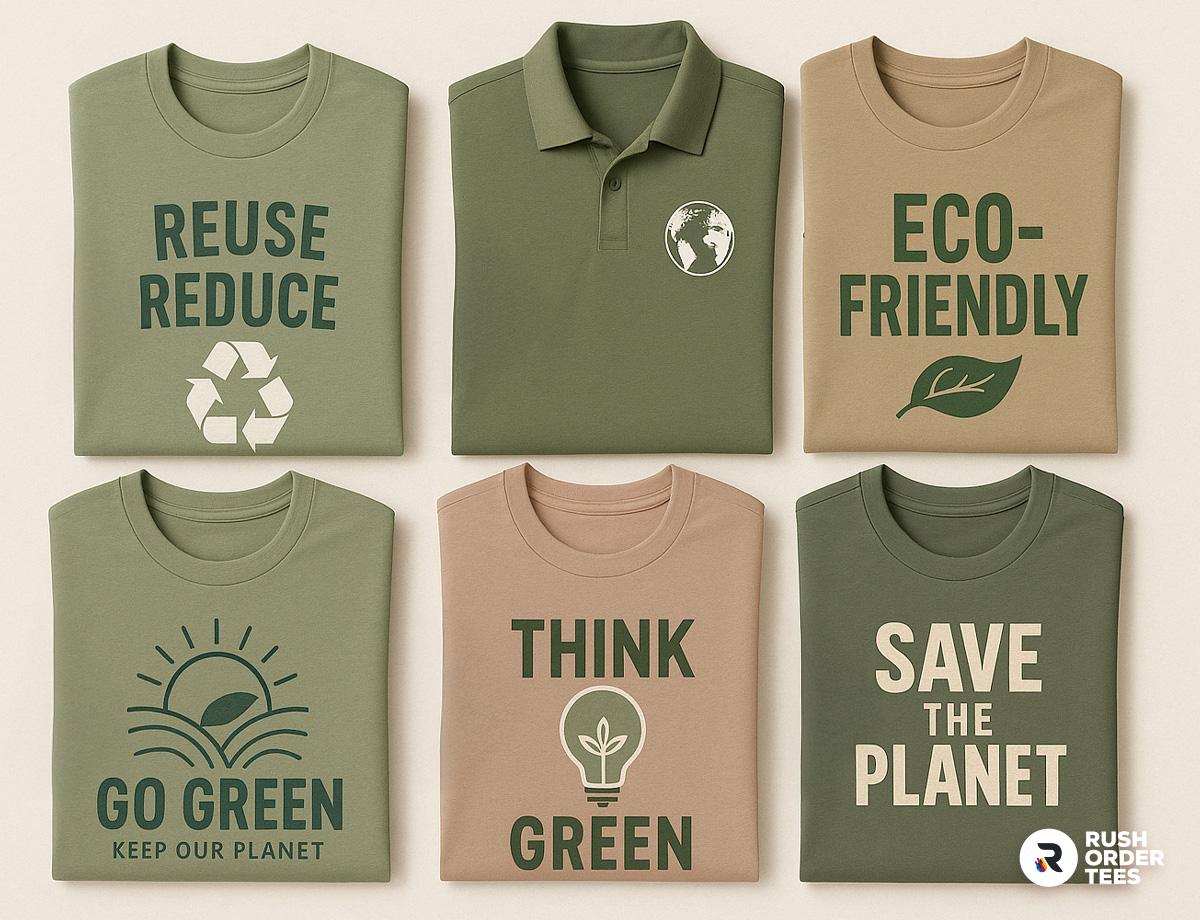
The sustainable apparel materials in our catalog—organic cotton, recycled polyester, bamboo blends, and responsibly sourced cotton—all provide clean, consistent surfaces that work beautifully with every decoration method we offer. Whether you're planning screen printing for large runs, DTF transfers for detailed designs, or embroidery for a premium look, these eco-friendly fabrics accept inks and threads just as well as conventional materials. Organic cotton actually often prints better than standard cotton because it's typically ring-spun for a smoother surface, while recycled polyester maintains the same moisture-wicking and durability properties that make synthetic blends popular for performance wear and corporate apparel.
Our sustainable promotional products follow the same principle—the environmental benefits never come at the expense of decoration quality. Recycled plastic drinkware takes laser engraving and pad printing beautifully, bamboo accessories create clean, precise laser-etched results, and organic cotton canvas provides an ideal screen printing surface for vibrant, long-lasting graphics. The sustainable nature of these materials doesn't create any trade-offs in terms of print quality, color vibrancy, or decoration durability. You get the same professional results you'd expect from any promotional product, plus the added value of authentic environmental benefits that customers can see and appreciate.
Top 10 Tips for Choosing Sustainable Materials
- Match materials to end use and comfort priorities. Choose organic cotton when softness and print quality matter most for everyday basics like sustainable sweatpants & joggers and casual wear.
- Select recycled polyester (rPET) for active and performance wear; it balances durability, moisture-wicking properties, and environmental credentials perfectly for sustainable hoodies, athletic wear, and workwear.
- Prioritize promotional products with clear environmental stories. Look for recycled plastic drinkware, bamboo accessories, and organic cotton canvas for events where the sustainability message needs to be immediately obvious and impactful.
- Always ask about certifications to confirm real impact. Look for GOTS certification on organic cotton, recycled content verification on rPET, and Fair Trade certification for ethical manufacturing practices.
- Consider your decoration method during material selection. Organic cotton excels for screen printing and embroidery, while recycled polyester works well for DTF heat transfers.
- Budget for slight premium costs but calculate long-term value. Sustainable materials can cost a bit more upfront but deliver better durability, customer satisfaction, and brand positioning benefits.
- Choose versatile base colors that reinforce your environmental message. Earth tones, natural heathers, and classic neutrals work better than bright synthetic colors for sustainable positioning.
- Think about the entire lifecycle, not just the material. Select durable items that customers will keep and use repeatedly rather than disposable promotional products, even if they're made from sustainable materials.
- Don't compromise on quality for sustainability claims. The best sustainable materials in our catalog perform as well or better than conventional options, so there shouldn't be any trade-offs in comfort, durability, or print quality.
- Start with proven sustainable options rather than experimental materials. Stick with established choices like organic cotton, rPET, and bamboo for your first sustainable orders, then explore emerging options once you've built confidence and customer demand.
Making Sustainable Material Choices That Matter
The shift toward eco-friendly custom apparel isn't just good for the planet—it's good for your brand, your customers, and your bottom line. By understanding the difference between genuine sustainability terms and marketing fluff, choosing proven materials like organic cotton and recycled polyester, and selecting promotional products made from recycled plastics and bamboo, you're creating merchandise that tells an authentic brand story. These materials don't require compromises on quality, print performance, or durability; they simply offer a better way to create custom products that customers will value and use for years to come.
RushOrderTees has spent over two decades building expertise in custom apparel and promotional products, and we bring that knowledge to every sustainable project we handle. Our team understands which eco-friendly materials work best with different decoration methods, how to balance environmental goals with practical considerations like timeline and budget, and which sustainable options deliver the most impact for your specific audience. Whether you're ordering your first batch of organic cotton t-shirts or planning a comprehensive sustainable merchandise campaign, we guide you toward choices that work—both for your project goals and for the planet. Get started today and make your mark with sustainable materials.

About the Author
A graduate of the Multimedia program at the University of the Arts in Philadelphia, Imri Merritt is an industry veteran with over 20 years of graphic design and color separations experience in the screen printing industry.